| The Jerseyman | |
|
A group of Big J's Volunteers pay a visit to the USS Wisconsin berthed in Norfolk, VA Rich Thrash, Brass Team Volunteer
In the first week of October a group of volunteers from the Big J headed south to pay a visit to the USS Wisconsin. I was originally on the list to go with these guys but work commitments kept me from making the trip. Below are a bunch of photos from their visit. |
|
|
|
|
|
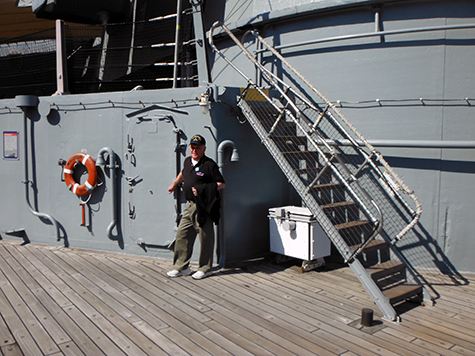
Big J volunteers that made the
trip south included, |
|
|
|
|
|
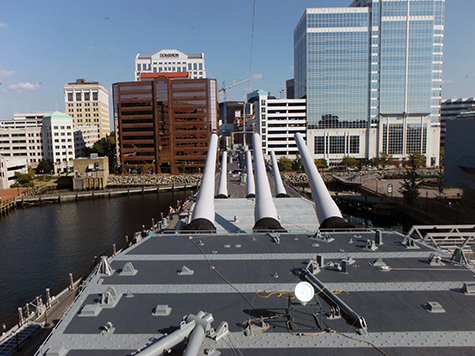
Shot down the starboard side
looking aft, |
|
|
|
|
|
Shot of the bow and forward brow before going onboard. |
|
|
|
|
|
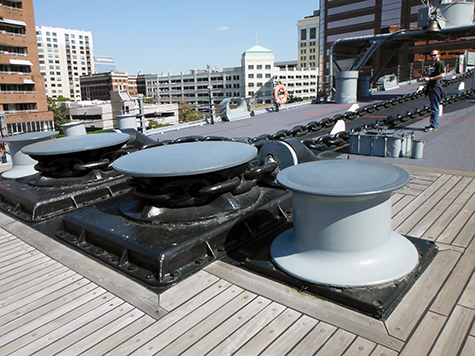
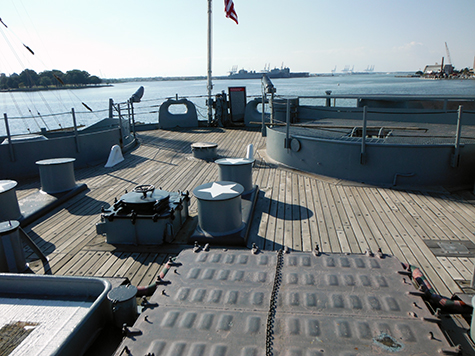
Up on the forecastle, wow look at the teak, that's amazing! |
|
|
|
|
|
Her bell is on the opposite side of
the CAGE Antenna mount. |
|
|
|
|
|
Visitors on the Wisconsin can walk
all the way up to the Bull Nose. |
|
|
|
|
|
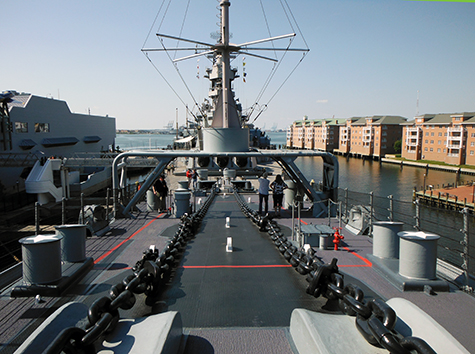
Shot looking aft, she really looks very fresh and clean. |
|
|
|
|
|
Shot looking aft down the starboard side past Turret 1. |
|
|
|
|
|
John Stickney checking out the
Quarterdeck |
|
|
|
|
|
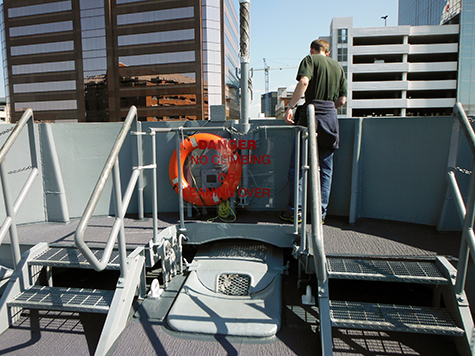
Another shot on the Main Deck just aft of the Quarterdeck Shack. |
|
|
|
|
|
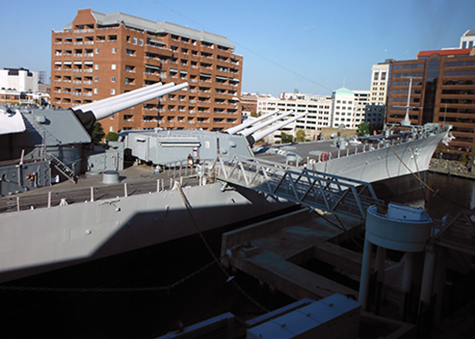
Shot from the O5 level, she is in a really interesting location. |
|
|
|
|
|
Shot of Turret 3 and part of the fuel transfer system tower. |
|
|
|
|
|
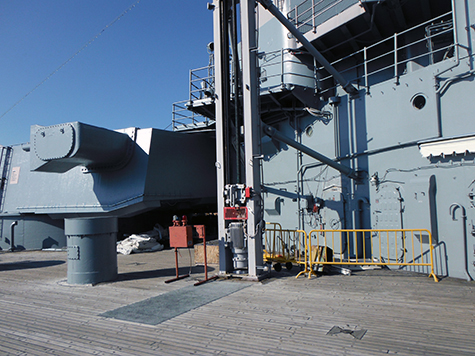
Mount 55 displaying the USMC
insignia, this mount must |
|
|
|
|
|
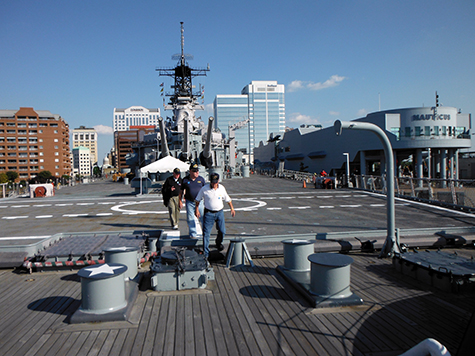
Shot on the Fantail looking forward at the helipad and Turret 3. |
|
|
|
|
|
Shot looking at the stern, teak decking looks awesome back here too. |
|
|
|
|
|
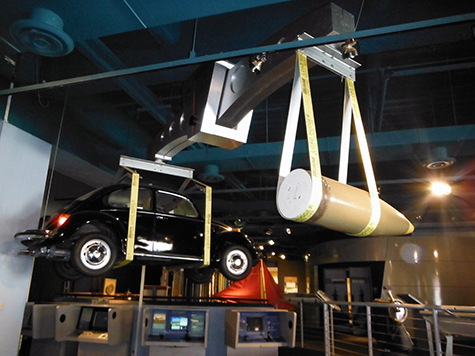
Exhibit in the Nauticus museum
depicting the weight |
|
|
« « « « « « « « « « « « « « « « « « « |
|
|
4th Annual Battleship New Jersey Golf Tournament Brian Callahan, Reporter-at-Large
The 4th Annual Battleship New Jersey Golf Tournament was again a success! Not only did the event raise some much needed revenue for our nation's most decorated battleship, but it also was a great time for everyone who played or came out for dinner!
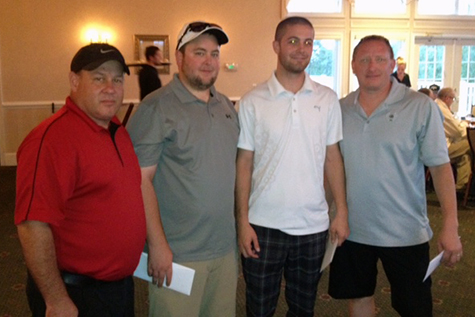
Congratulations to the winning team of Brett Jolly, Chris Norton, Lou Parducci and Steve Braslow! Closest to the Pin went to Tom Martin at 2'8", and Longest Drive was from Robert Prickett.
Golfers enjoyed the challenging Sea Oaks Country Club course, took home some nice prizes and gifts, and had a delicious dinner and lunch! Thank you to all golfers, hole sponsors, dinner attendees and prize donators!
A special thanks
to our partners EMR Group, Bowman and Company,
Brown & Brown, Cleaned Rite, Andreotti's, Echelon Ford, Auburn Road
Vineyards, Flying Fish Brewing Co., L&M Vending, the Camden Riversharks,
Adventure Aquarium, NSR Solutions, and the Battleship Dufferteers. See you next October when we'll tee it up again for the Big J! |
|
|
|
|
|
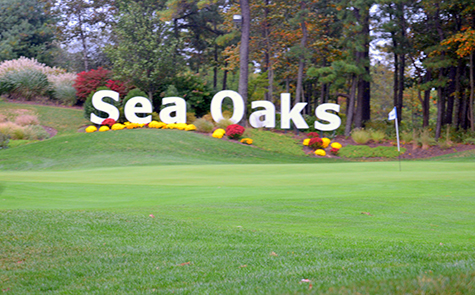
The venue for the 4th Annual Battleship New Jersey Golf Tournament. |
|
|
|
|
|
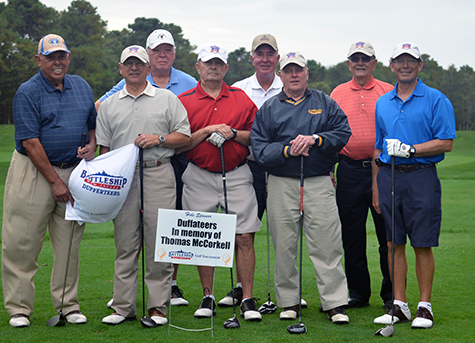
The Dufferteers sponsored a hole in
memory of Tom |
|
|
|
|
|
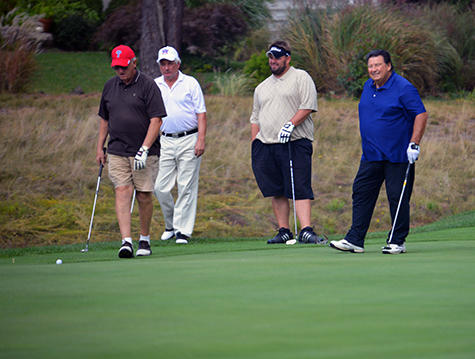
Foursome on the course enjoying the day of golf. |
|
|
|
|
|
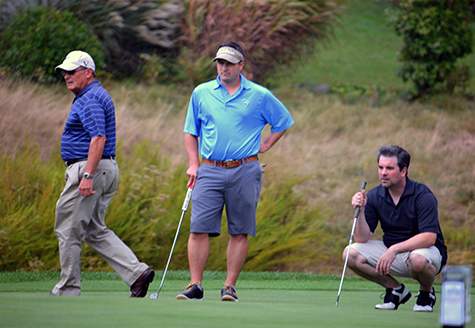
Another group trying to put that little white ball in the cup. |
|
|
|
|
|
Phil found something he wanted to
take home. |
|
|
|
|
|
Winning
team of Brett Jolly, Chris Norton, |
|
|
« « « « « « « « « « « « « « « « « « « |
|
|
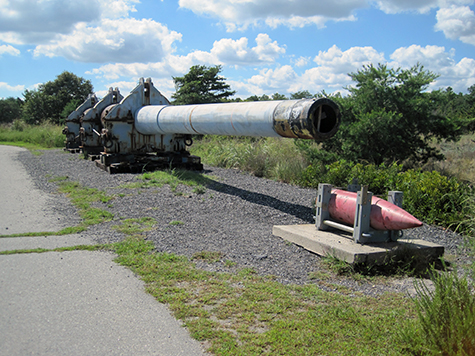
Fort Miles Historical Area, Lewes, Delaware Captain Walter M. Urban, Jr. USNR (Ret.) Lying amidst rolling dunes, in the shadow of a World War II observation tower in Cape Henlopen State Park, Lewes, DE is the Fort Miles Historical Area. The Delaware River was a chief priority for defense planners during World War II, because of the access it afforded to the giant trade centers of Wilmington, Philadelphia and beyond. Fort Miles was a key piece in the nation's coastal defense at that time. The heavy guns, mine fields and searchlights of Fort Miles provided in-depth defense; however, the growing use of long-range missiles and other modern weapons eventually brought an end to harbor defenses in the United States. During World War II, coastal artillery batteries were located both here and across the Delaware Bay in Cape May, NJ. They included 6-, 8-, 12- and 16-inch rifles plus an assortment of smaller artillery pieces. The first gun emplacement was completed in late 1941 along with 15 observation/fire control towers (5 of which remain today) plus an elaborate fire direction center. Fort Miles was home to 2,200 personnel during its hay day in the early to mid 1940's. The Fort Miles Historical Association (FMHA), with support from private residents and businesses in the Lewes, DE area, seized on the opportunity to acquire a 16-inch naval rifle that the U.S. Navy had offered for donation. Located 150 miles away in the Chesapeake, VA area, three 16-inch monster cannon that were originally mounted in turret II onboard USS MISSOURI (BB-63) were stored. They were onboard the historic IOWA class battleship when the "Mighty Mo" hosted the surrender ceremony on September 2, 1945 in Tokyo Bay, Japan that ended World War II. The FMHA was awarded custody of one of those three barrels (barrel No. 371), but the expense to move it was funded largely from private donors. Transporting one of these rifles that weigh approx. 120 tons each, and measure 68 feet in length, was no small feat. The trip included both barge and rail car travel, with the final leg of the journey from Georgetown, DE to Lewes... a distance of 16.5 miles... completed by the Delaware Coast Line Rail Road. There was a lot of excitement on April 17, 2012 as a Diesel Engine No. 4054 pulled the special flatcar carrying Barrel No. 371 to a location just outside the Cape Henlopen State Park. A brief welcoming ceremony took place behind the Lewes Public Library as the train stopped to give everyone an opportunity to see first-hand the incredible size of one of these huge rifles. Since the rail line ended just outside the State Park, a special crane was needed to lift the barrel and it's three 2-ton each shipping saddles onto a special flat bed truck for the remainder of the trip. It now rests just inside Fort Miles less than one mile from the main entrance to the State Park. People visiting the historic Fort can now see up close and personal this historic rifle as it rests across the road from one of several Observation Towers where lookouts once kept a constant vigil in case an enemy surface ship or submarine appeared. The barrel has not been refurbished, but plans call for acquisition in the near future of at least one mounting cradle that held one 16-inch rifle. Several are known to be located in Dahlgren, VA... some 200 miles away. Again, the size of these cradles is immense... in excess of 200,000 lbs. each. No definite date has been set for when one of these cradles will travel to Fort Miles. Once the cradle arrives, and it is placed in a newly constructed foundation, the refurbished barrel will be lifted into place. Visitors will get a chance to see exactly what one of these huge coastal artillery batteries looked like when they were relied on to protect the Delaware Bay from potential attack over 70 years ago. It should be noted, the batteries at Fort Miles and in Cape May never fired a shot in anger. By 1958, Fort Miles was no longer important to the defense of the region, and in 1964, 543 acres of the base were returned to the State of Delaware, forming the heart of Cape Henlopen State Park. In April 2005, Fort Miles was added to the National Register of Historic Places. Fort Miles is a special place for families, history buffs, veterans, or anyone interested in learning about the Delaware shore and WW II. Take a tour of the Fort, enjoy an interpretive program and celebrate the "greatest generation" in our nation's history.
Please review the following
links for video coverage of the movement of barrel No. 371.
http://www.youtube.com/watch?v=Xbze_w3TEcY http://www.youtube.com/watch?feature=fvwp&v=VTyiE1MQfSI&NR=1
Editors Note: For those of you who enjoyed this story check out the link below and view the video to learn about the Gun Barrel "Bookends" World War II Memorial located in Phoenix, AZ. It was recently dedicated on December 7, 2013 and features a 14-inch gun barrel from the Battleship Arizona and a 16-inch gun barrel from the Battleship Missouri, set up side by side representing the start and end of the war. It's a very cool video and tells the story about how the memorial came to be. |
|
|
|
|
|
Shot of Barrel No. 371 and 16-inch shell resting just inside Fort Miles. |
|
|
|
|
|
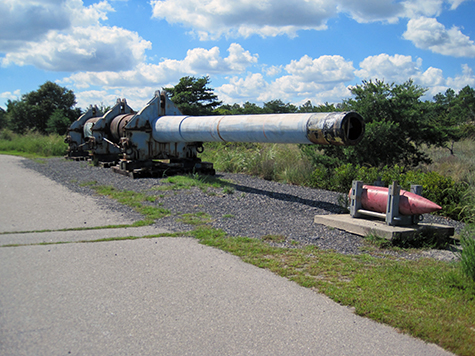
Second shot of the massive gun
barrel that |
|
|
« « « « « « « « « « « « « « « « « « « |
|
|
Page 2 of 8 |
|